
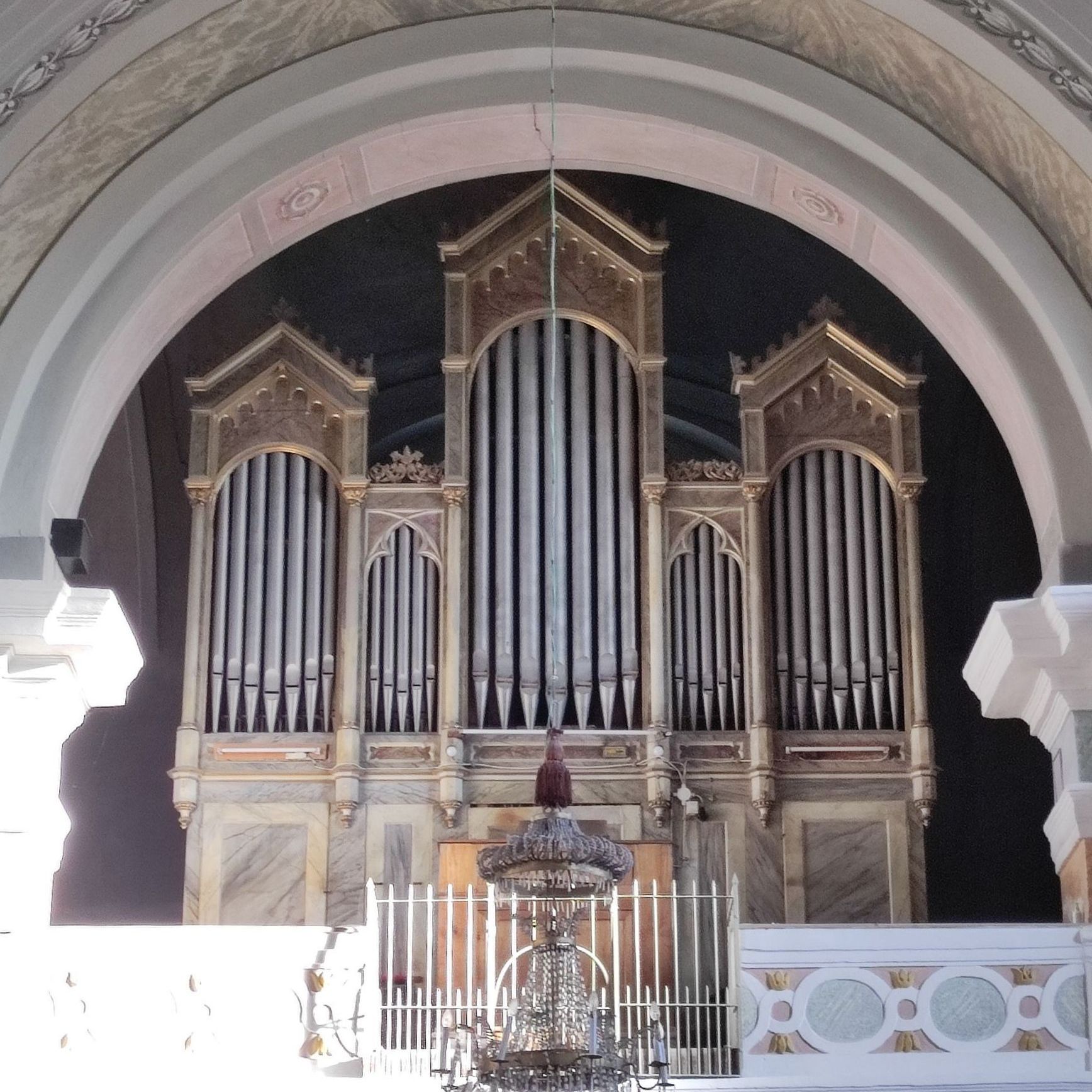
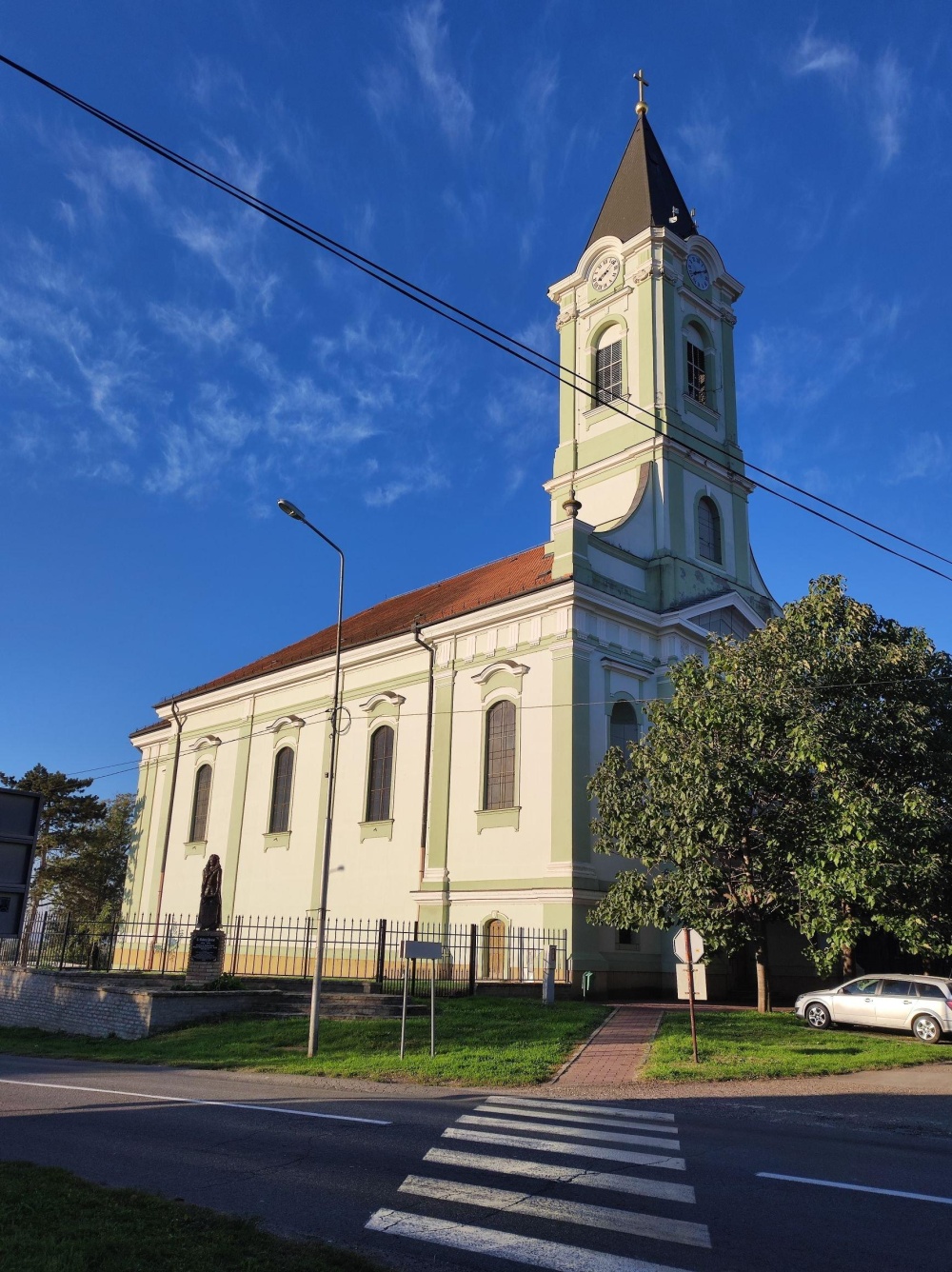
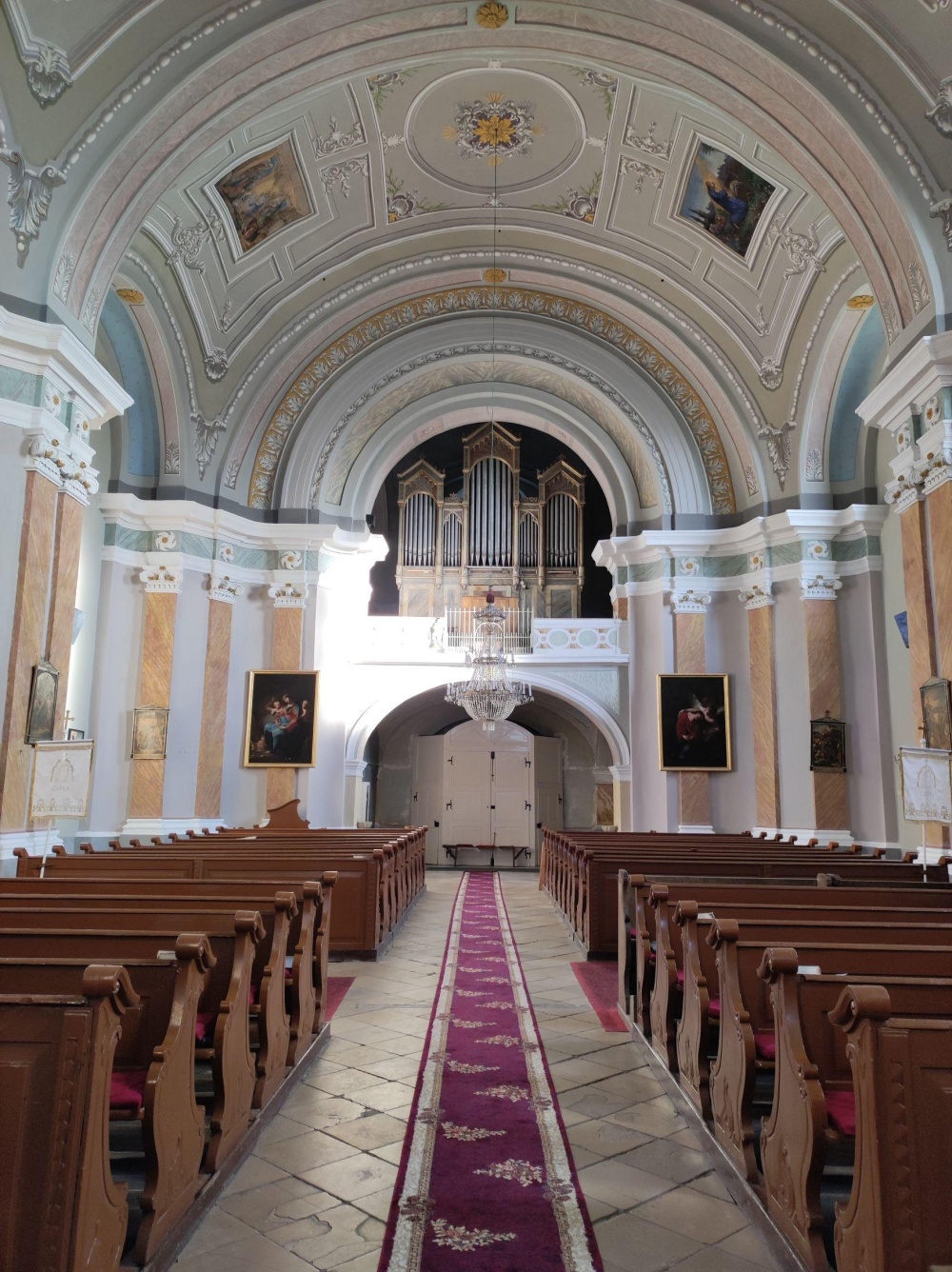
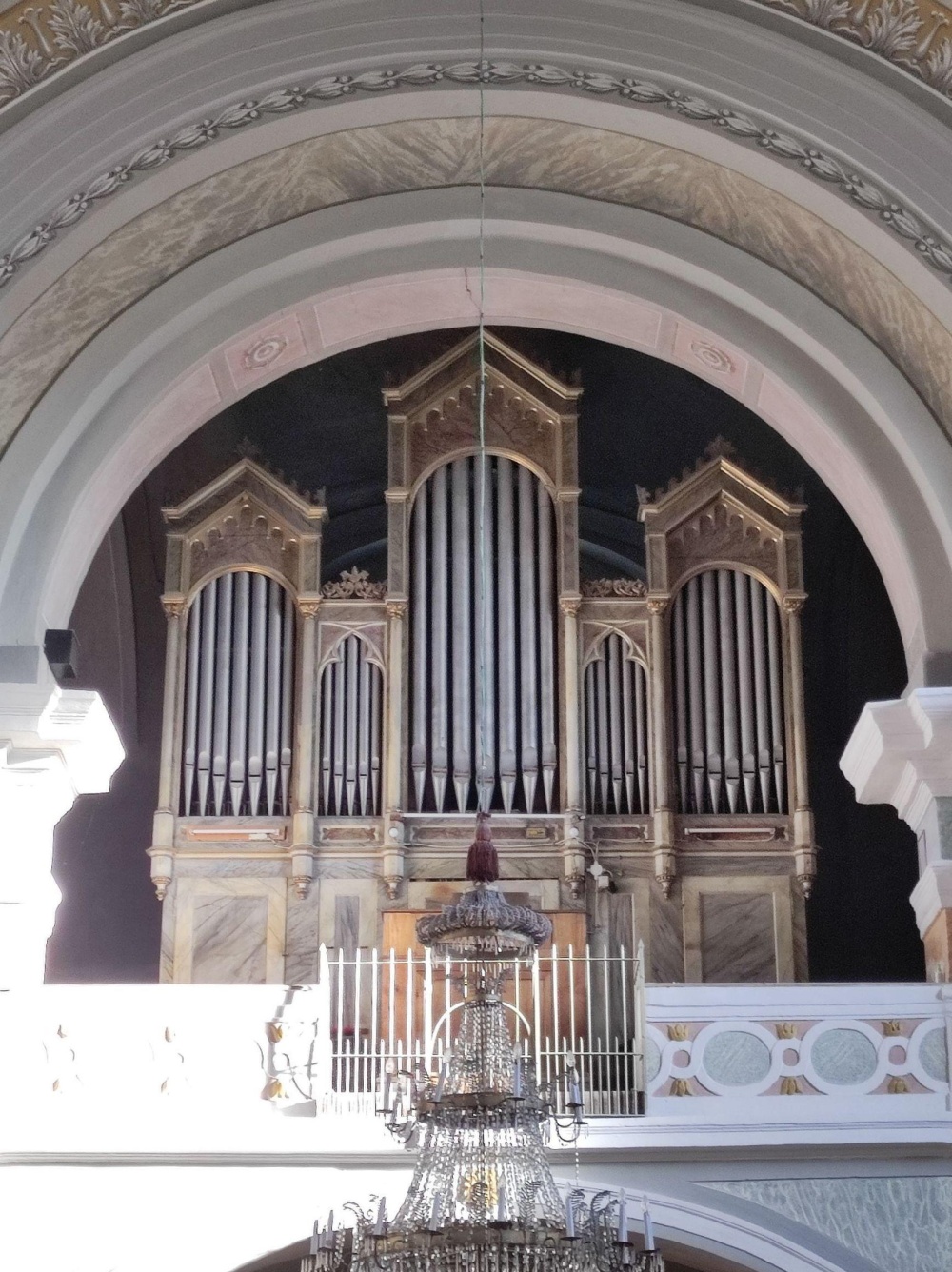
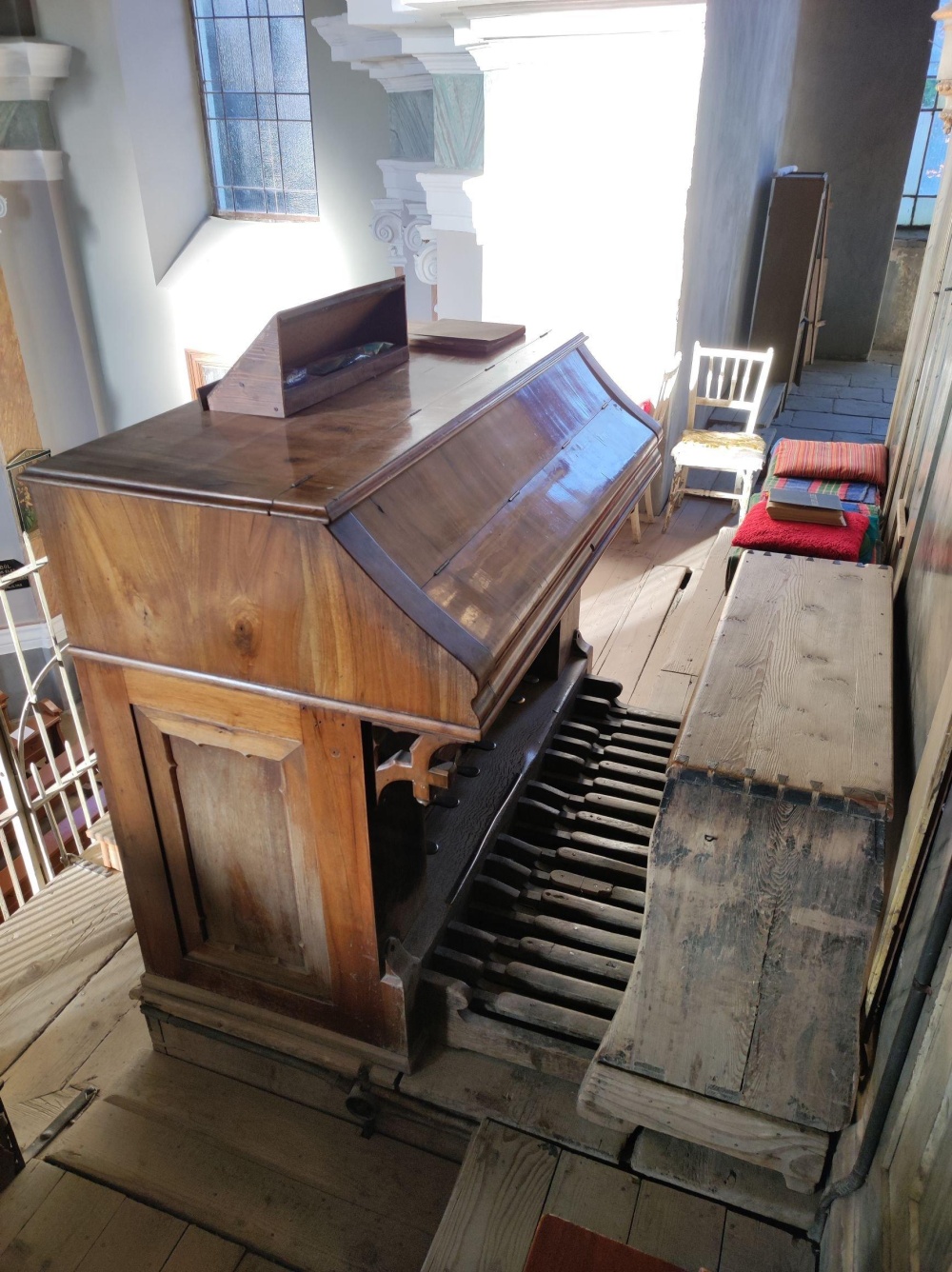
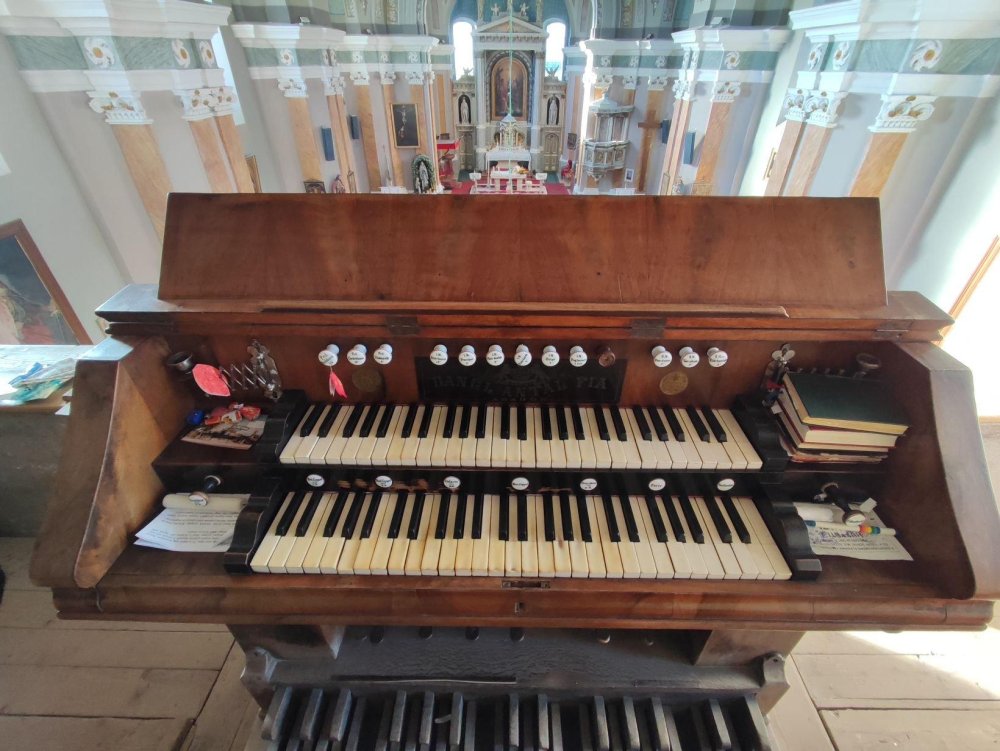
Čoka, Holy Trinity Catholic Church
Anton Dangl and Son, 1876, II/13, mechanical tracker action
← →
| Stop List | ||
| I. Grand-orgue | II. Positif | Pédal |
| Flûte bourdon 16´ | Flûte traversière 8´ | Subbass 16´ |
| Principal 8´ | Voix céleste 8´ | Contrebasse 16´ |
| Flûte double 8´ | Flûte d´amour 4´ | Violoncelle 8´ |
| Flûte harm. 4´ | Tremblant | |
| Octav 4´ | ||
| Prog. harm. 4 fach 2 2/3´ | ||
| Stop without designation | ||
| (drawknobs) | ||
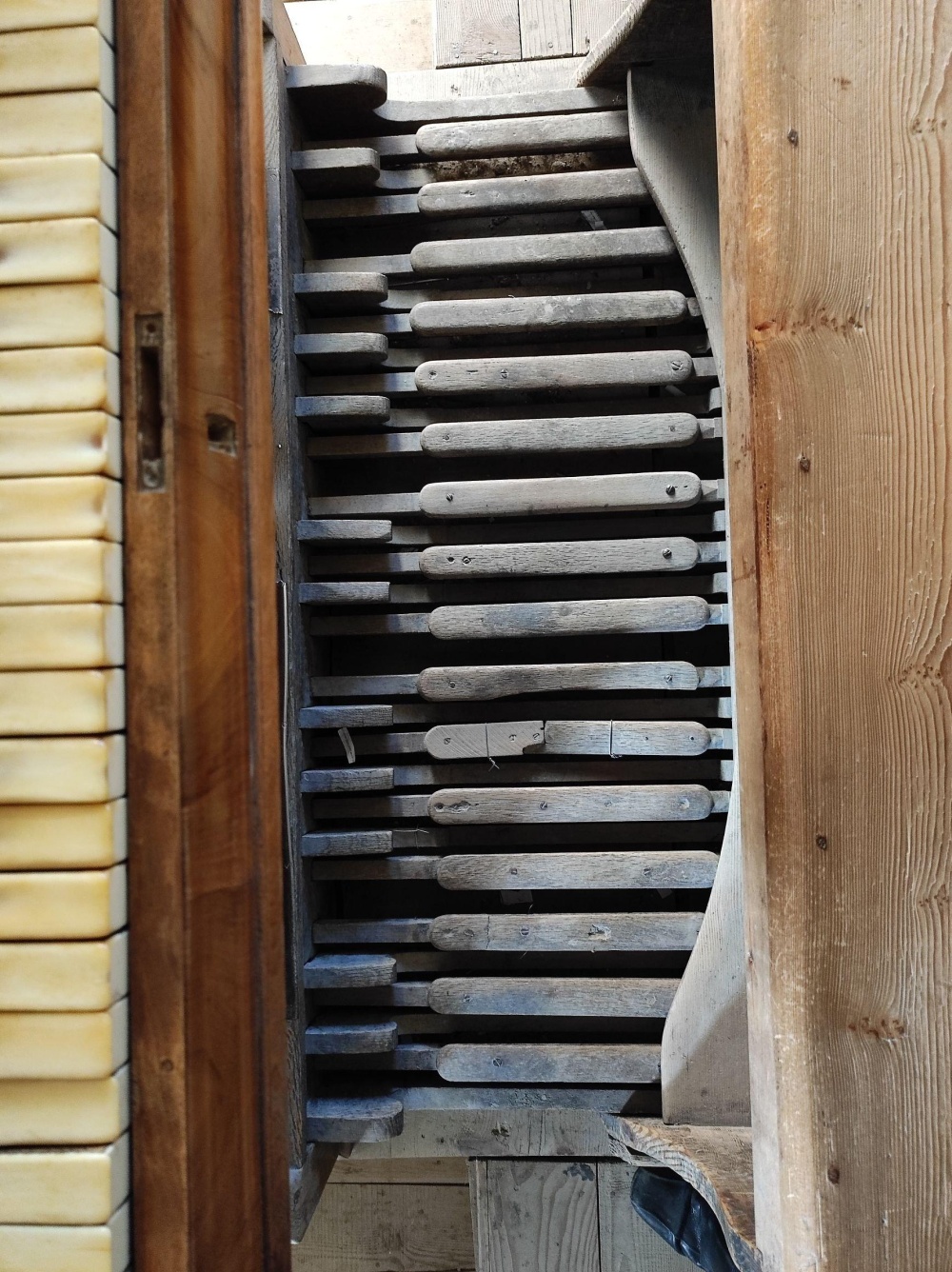
| Compass: manual range C-f´´´, pedal range C-d´ | ||
| Couplers: | ||
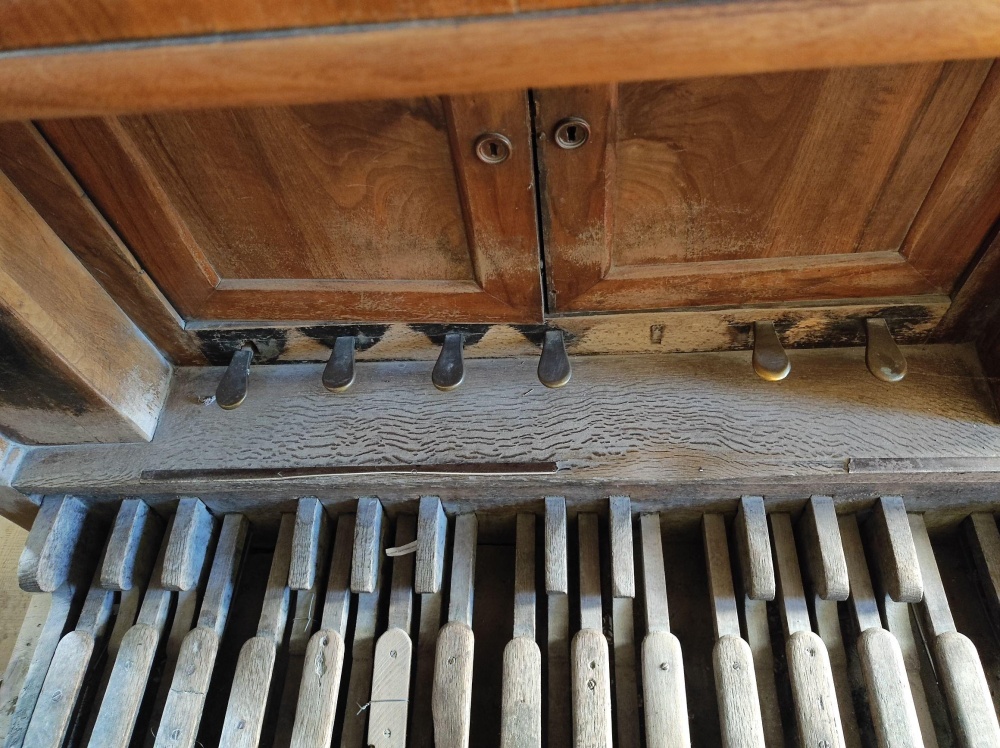
| II/I, I/P, II/P, Octavin zum II. M. (hook-down pedals) | ||
| Other playing aids: | ||
| Cres. & Decresc. zum II. M. (pedals) | ||
| Forte, Fortissimo (hook-down pedals) | ||
| Calcant bell (drawknob) | ||
| Windchest type: mechanical cone-valve chest | ||
| Remarks: | ||
| The copuler "Octavin zum II. M." is actually a coupler "Sub II/II", | ||
| that was built only in the small octave. | ||
| Sources: | ||
| Interview with the organ builder, Tibor Apró (2026) | ||
| Fieldwork of Zoltán Borbély (2022) | ||
| Photos: Zoltán Borbély | ||
← →