
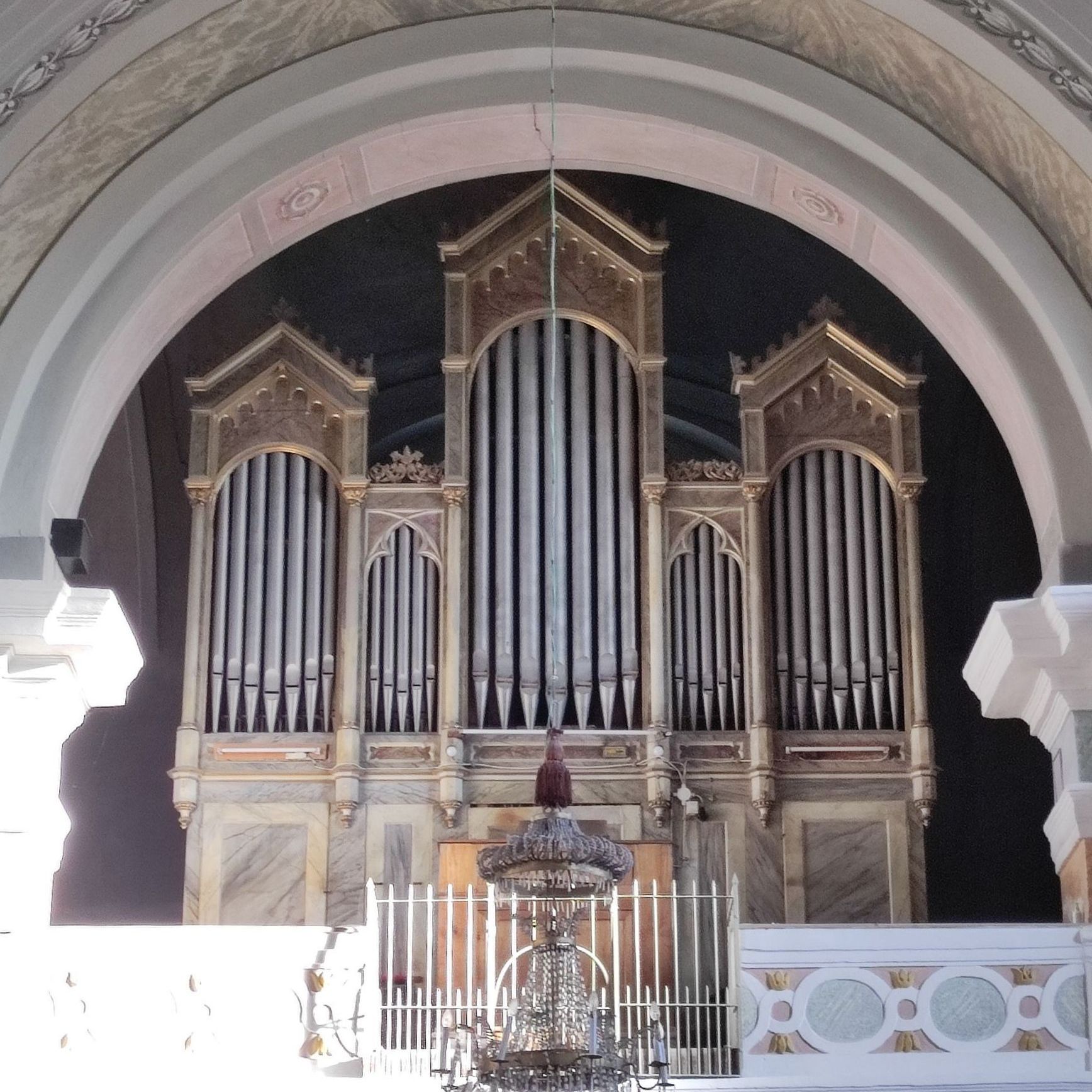
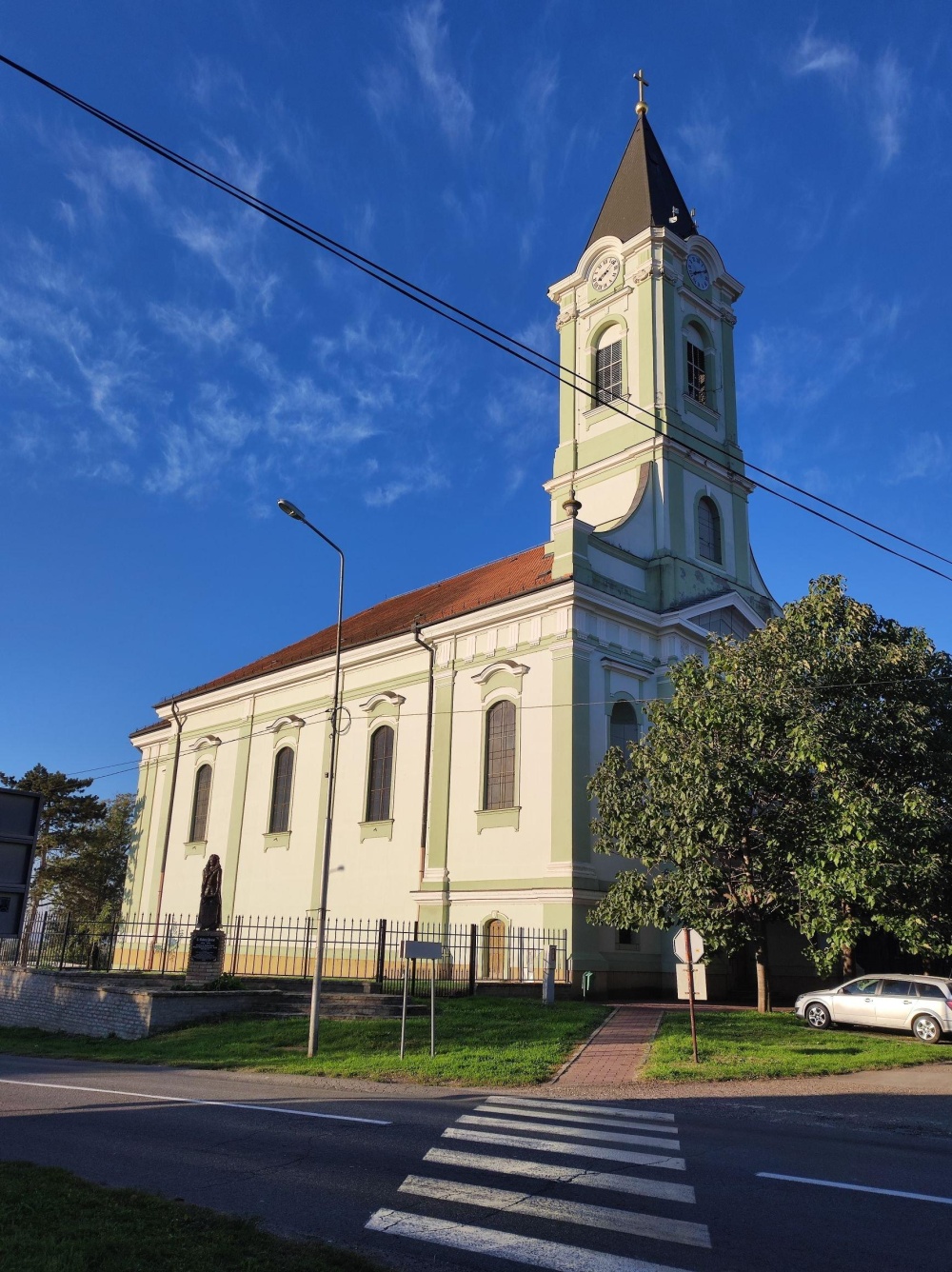
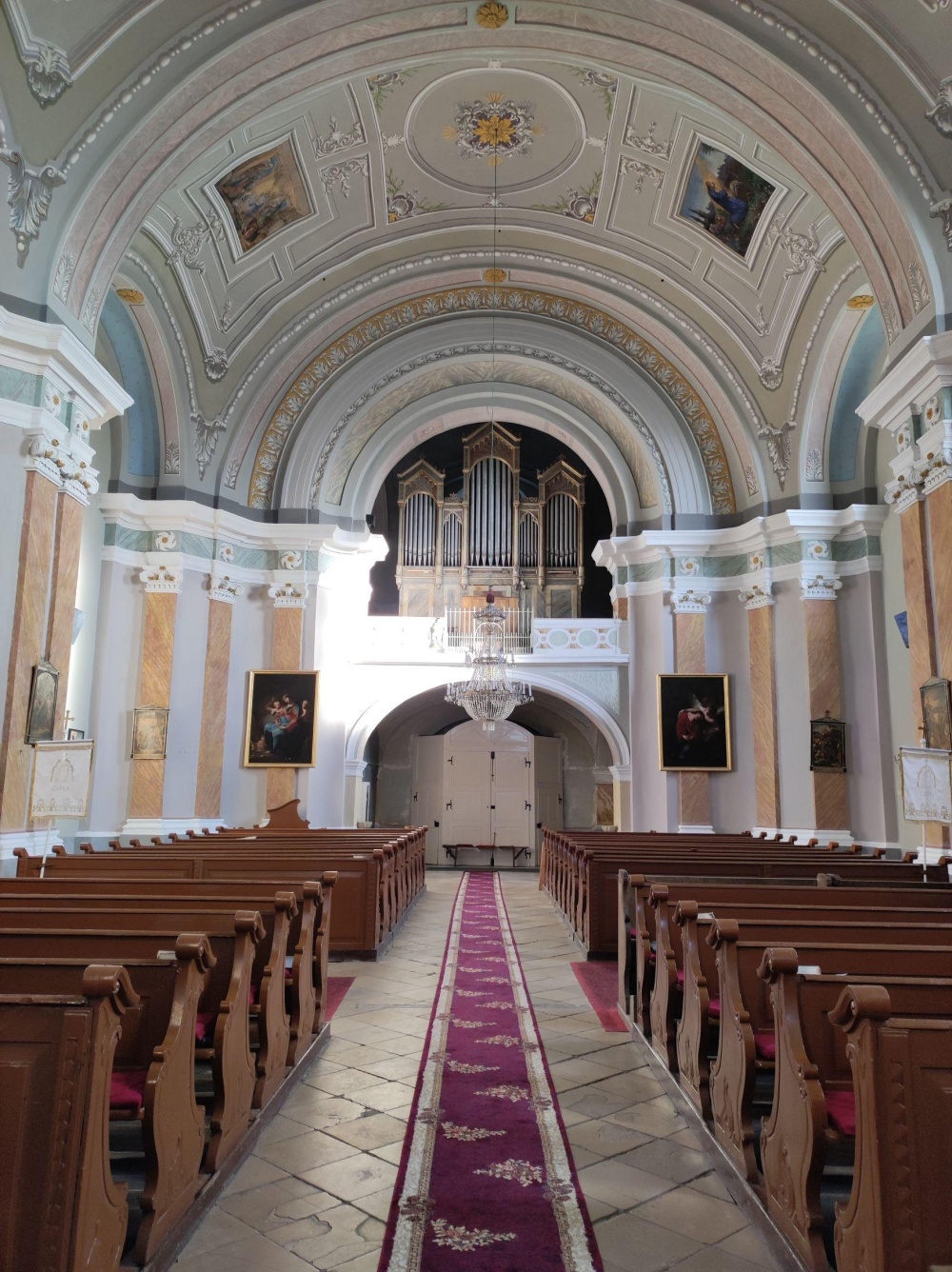
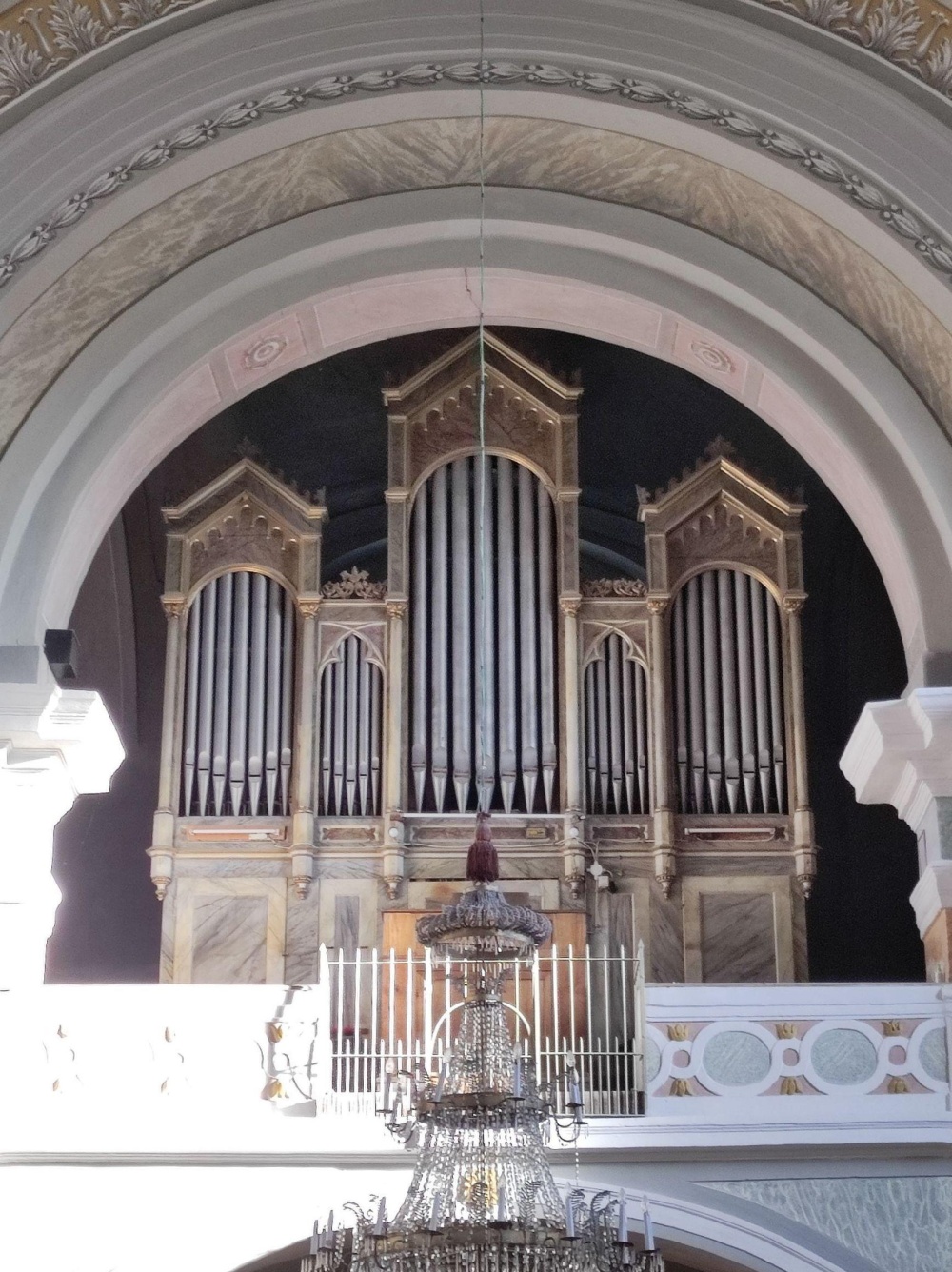
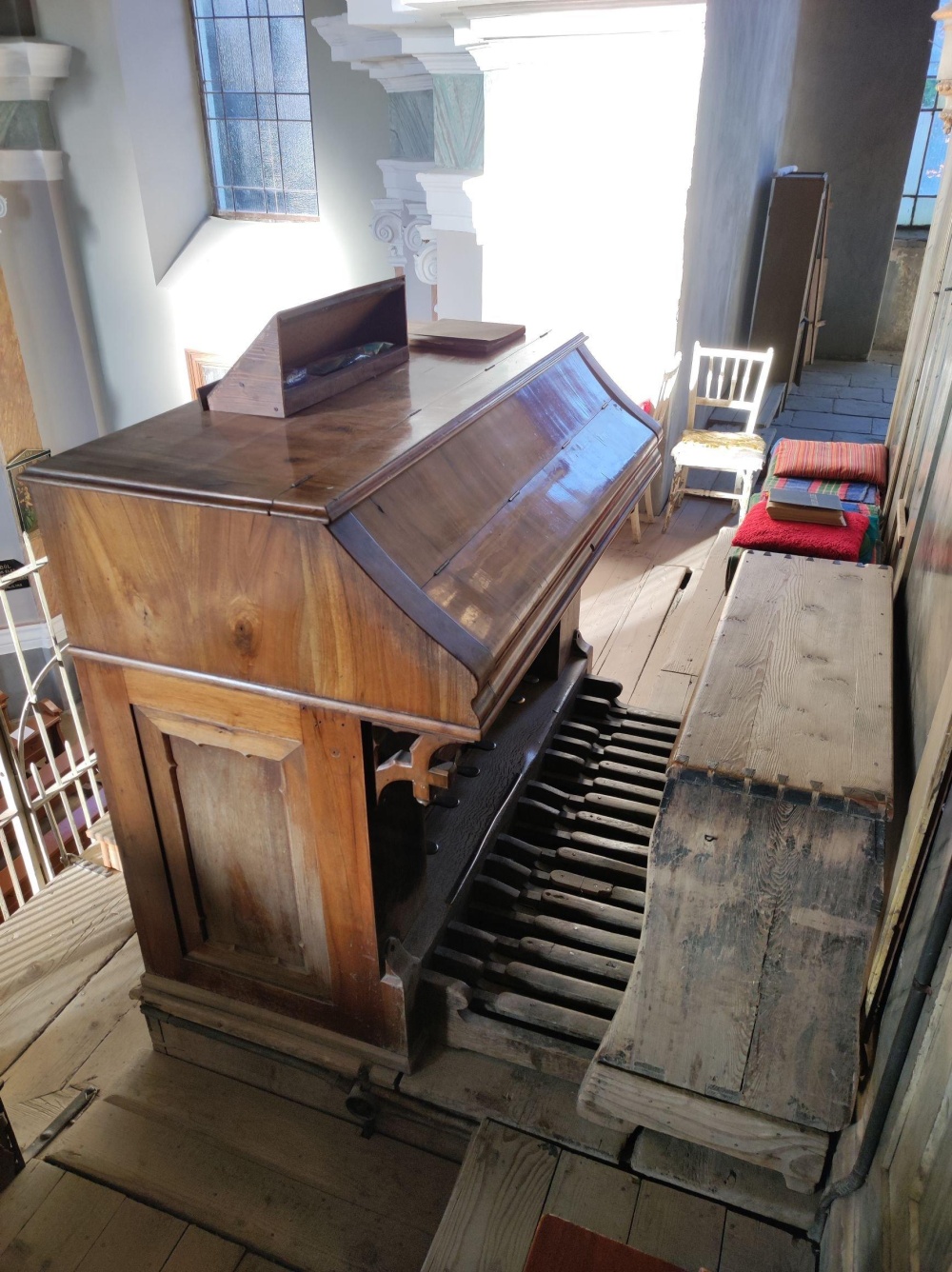
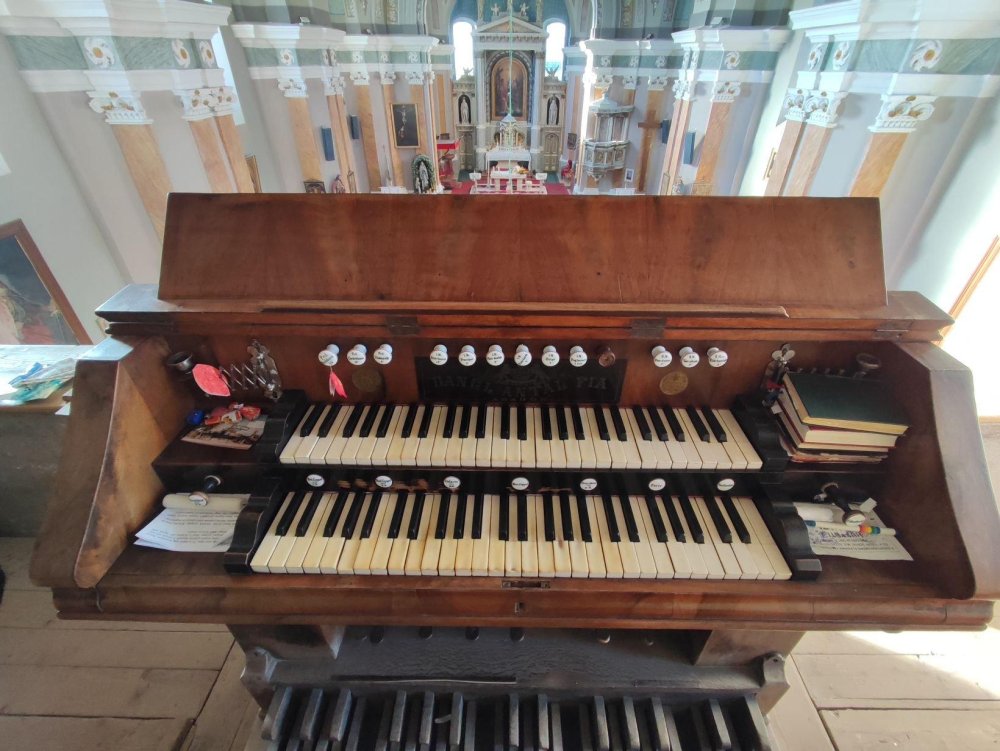
Čoka, Römisch-katholische Kirche Heilige Dreifaltigkeit
Anton Dangl und Sohn, 1876, II/13, mechanische Traktur
← →
| Disposition | ||
| I. Grand-orgue | II. Positif | Pédal |
| Flûte bourdon 16´ | Flûte traversière 8´ | Subbass 16´ |
| Principal 8´ | Voix céleste 8´ | Contrebasse 16´ |
| Flûte double 8´ | Flûte d´amour 4´ | Violoncelle 8´ |
| Flûte harm. 4´ | Tremblant | |
| Octav 4´ | ||
| Prog. harm. 4 fach 2 2/3´ | ||
| Register ohne Bezeichnung | ||
| (Registerzüge) | ||
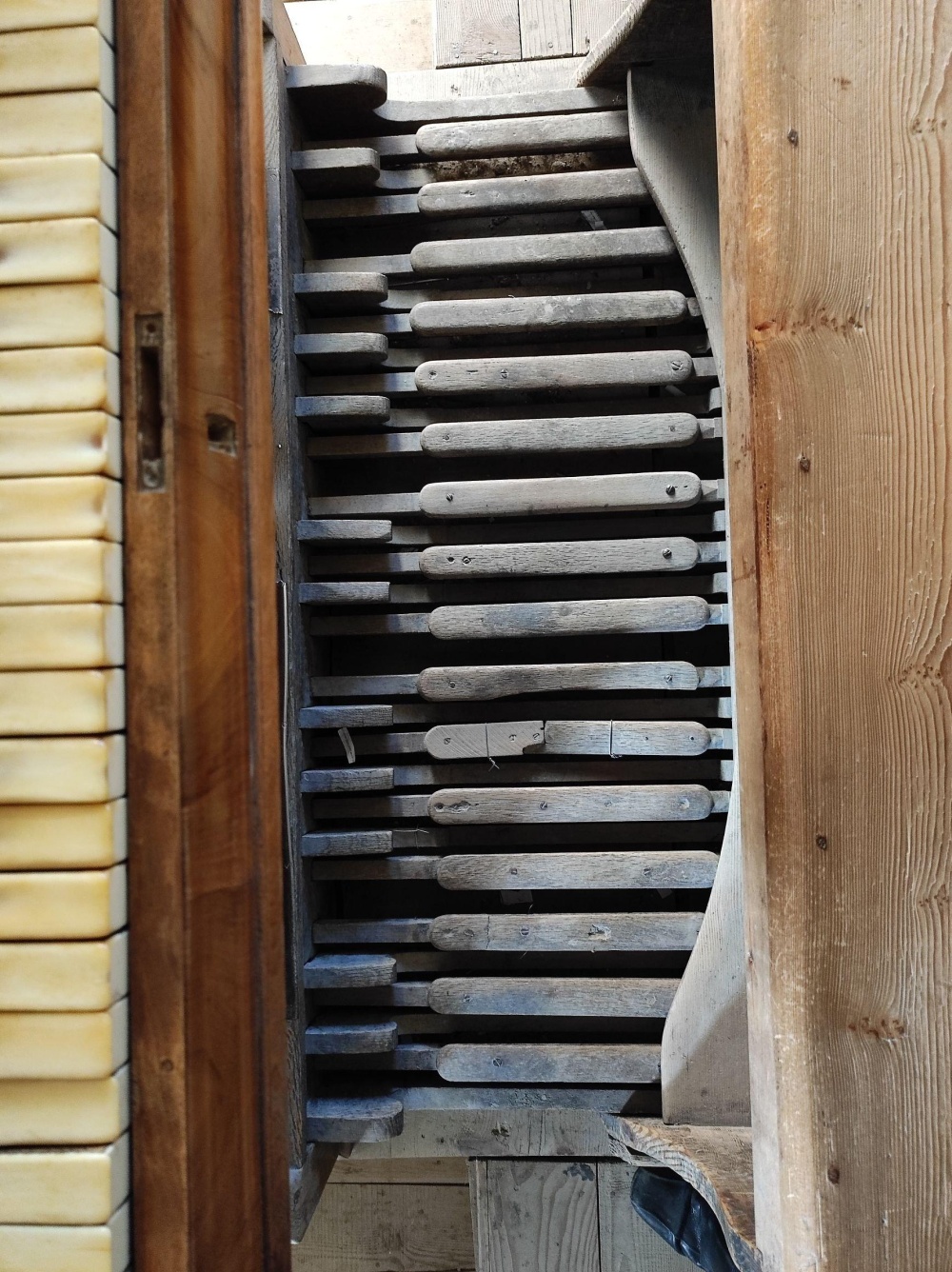
| Tonumfang: Manual C-f´´´, Pedal C-d´ | ||
| Koppeln: | ||
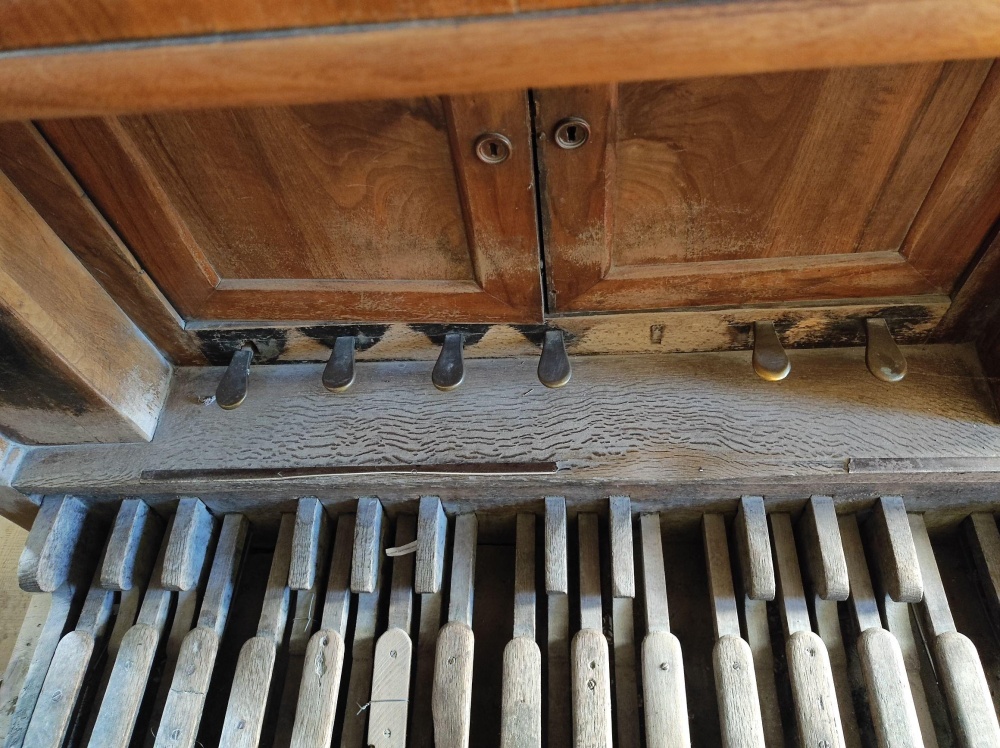
| II/I, I/P, II/P, Octavin zum II. M. (Fußtritte zum Einhaken) | ||
| Andere Spielhilfen: | ||
| Cres. & Decresc. zum II. M. (fehlender Fußtritt) | ||
| Forte, Fortissimo (Fußtritte zum Einhaken) | ||
| Calcantenruf (Registerzug) | ||
| Windladentyp: mechanische Kegellade | ||
| Anmerkungen: | ||
| Die Koppel "Octavin zum II. M." ist tatsächlich eine Sub II/II Koppel, | ||
| die nur in der kleinen Oktav ausgebaut wurde. | ||
| Quellen: | ||
| Interview mit dem Orgelbauer, Tibor Apró (2026) | ||
| Feldarbeit von Zoltán Borbély (2022) | ||
| Fotos: Zoltán Borbély | ||
← →