

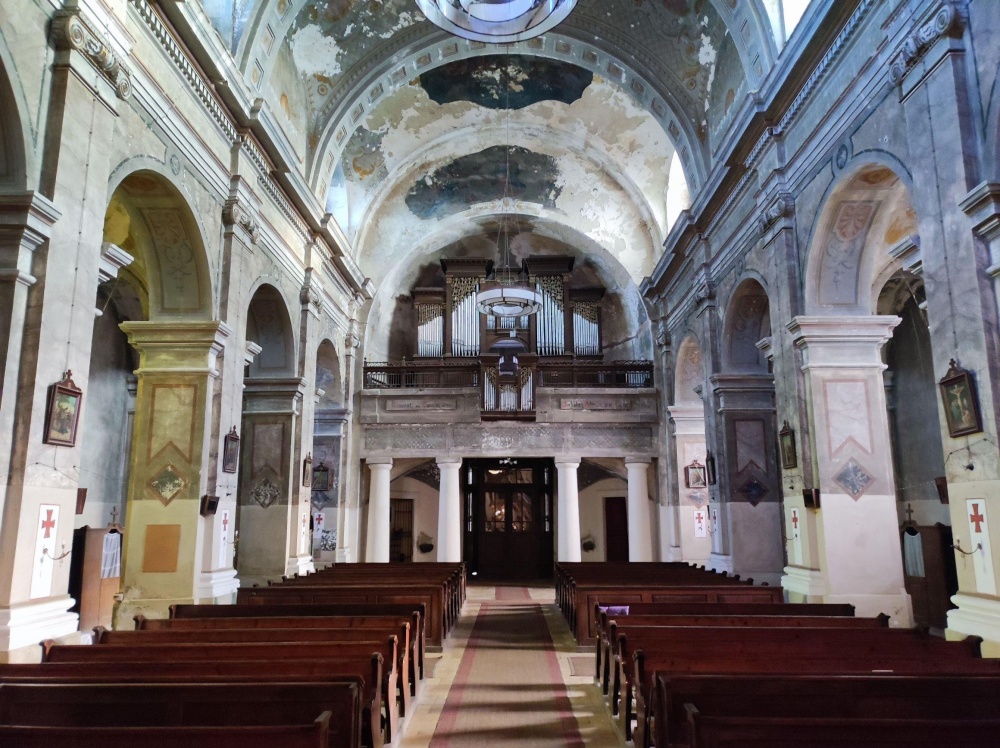

Stanišić, Holy Name of Mary Catholic Church
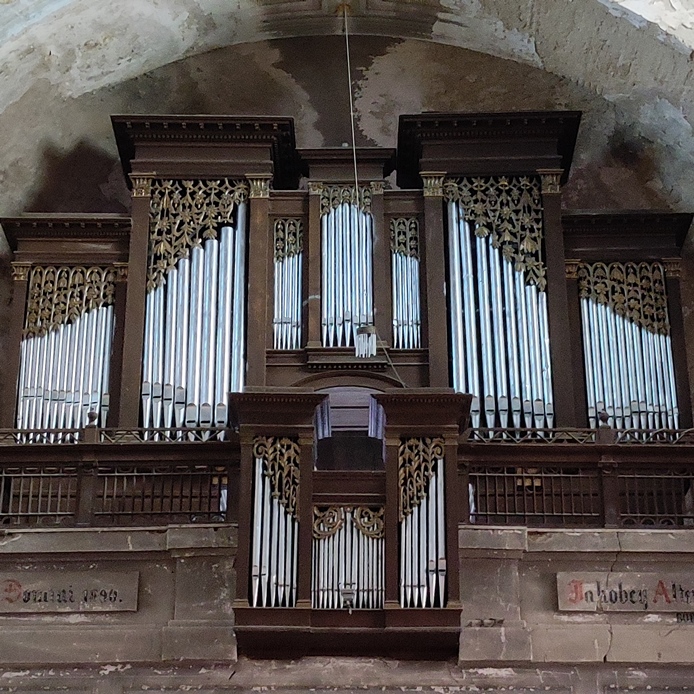
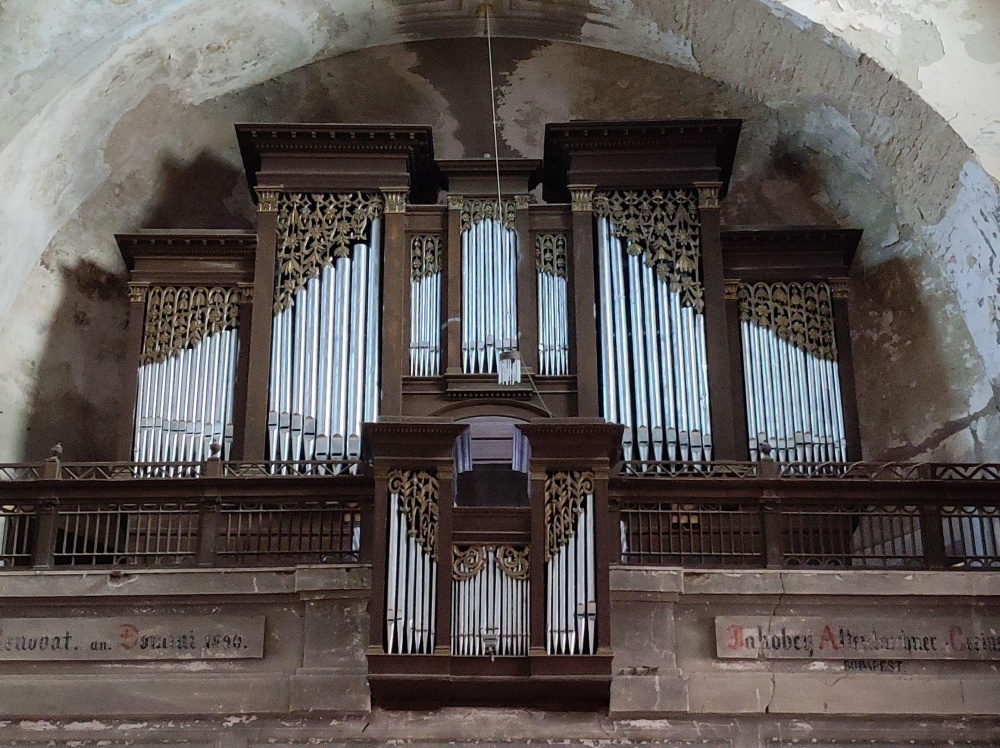
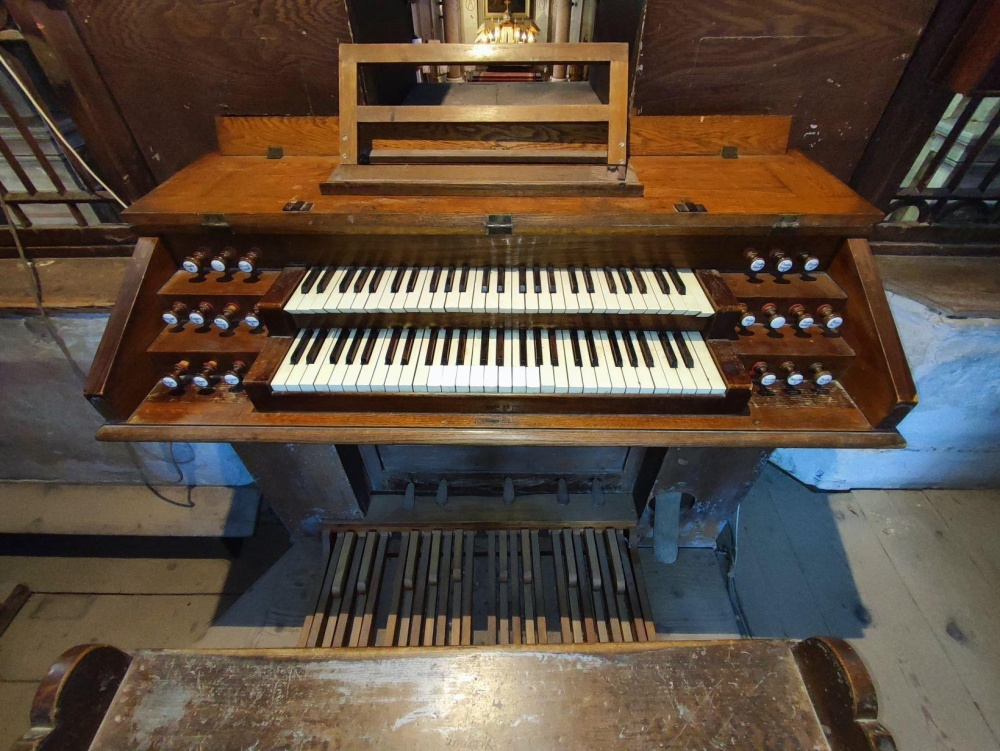
Caspar Fischer, József Angster, op. 137, 1890, II/20, mechanical tracker action
← →
| Stop List | ||
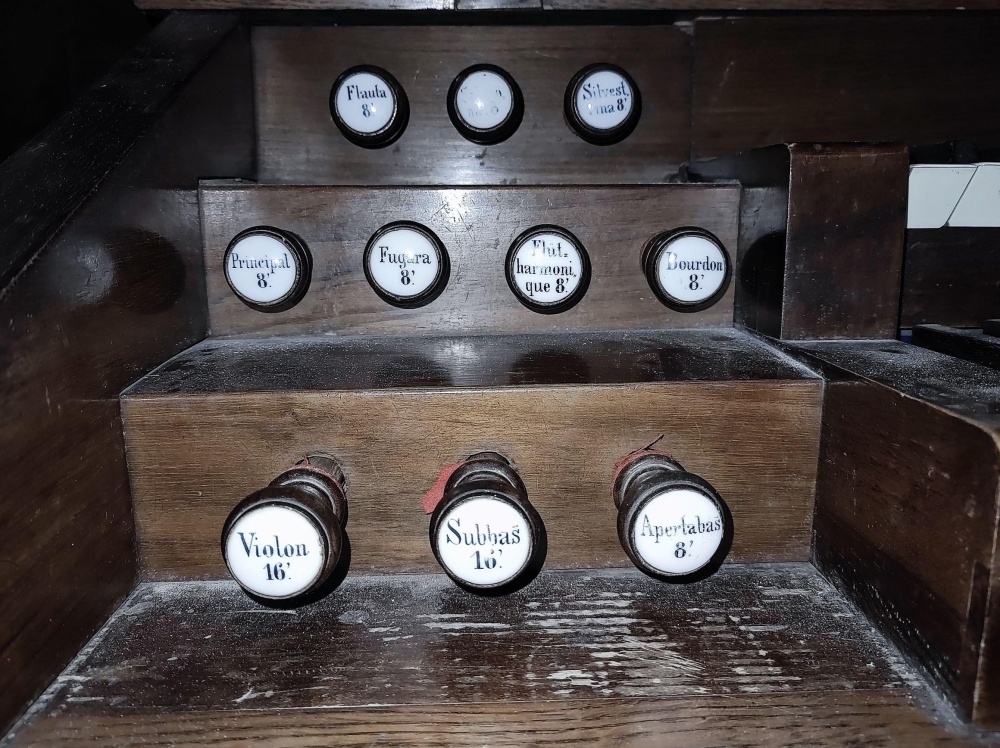
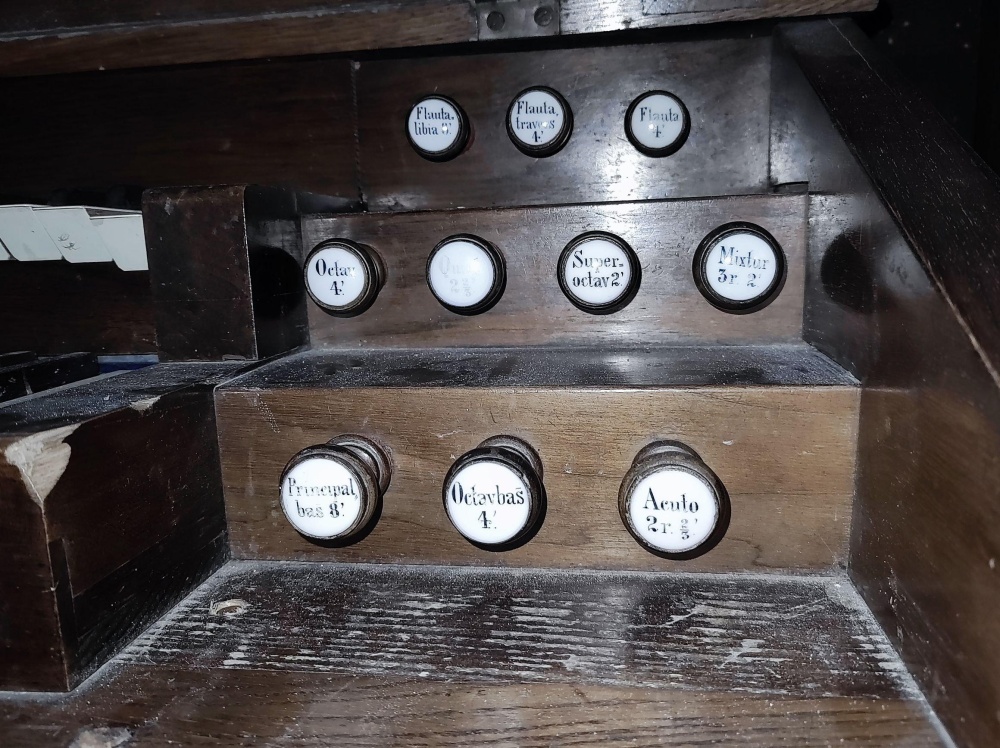
| I. Great | II. Swell | Pedal |
| Principal 8´ | Flauta 8´ | Subbass 16´ |
| Fugara 8´ | Flauta tibia 8´ | Violon 16´ |
| Flûte harm. 8´ | Salicional 8´ | Principalbass 8´ |
| Bourdon 8´ | Silvestrina 8´ | Apertabass 8´ |
| Octav 4´ | Flauta travers 4´ | Octavbass 4´ |
| Flauta 4´ | ||
| Quint 2 2/3´ | ||
| Superoctav 2´ | ||
| Mixtur 3 fach 2´ | ||
| Acuta 2 fach | ||
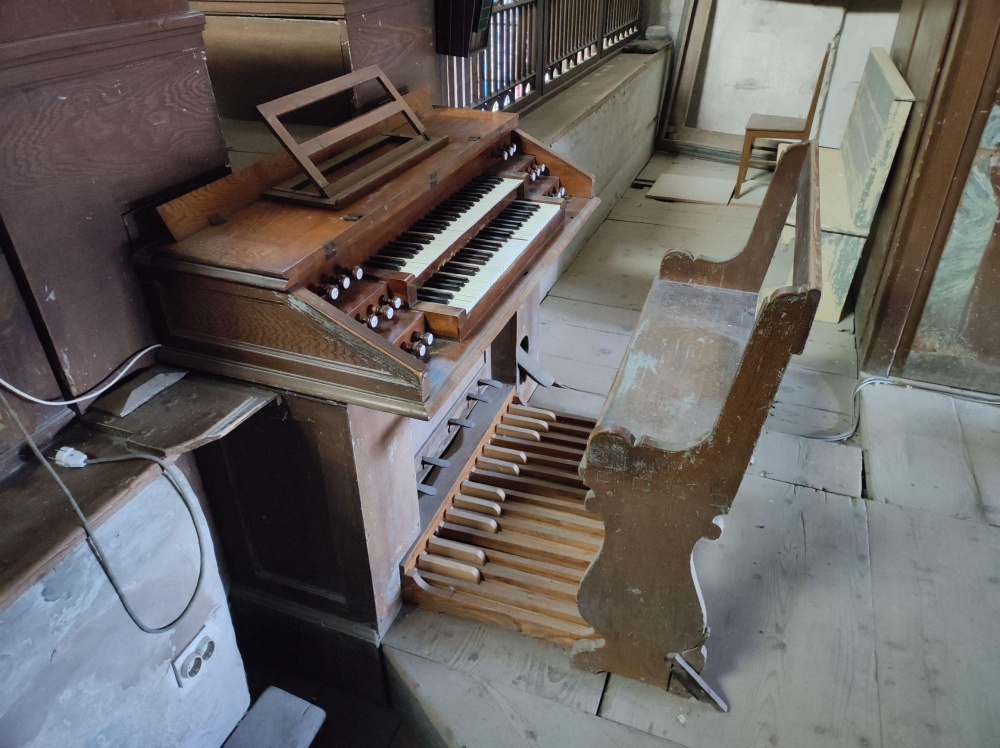
| (drawknobs) | ||
| Compass: manual range C-f´´´, pedal range C-h (it repeats) | ||
| Couplers: I/P, II/P, II/I (hook-down pedals) | ||
| Other playing aids: Forte, Forte off (pedals), expression shoe | ||
| Windchest type: mechanical slider chest | ||
| Remarks: | ||
| The construction method and the stylistic features of the organ case | ||
| prove, that the instrument was built by Caspar Fischer. | ||
| 2015, on occasion of the 200th jubilee of the church, György Mándity, | ||
| a hungarian organbuilder restored the organ and produced new | ||
| prospect pipes that were missing since the First World War. | ||
| Sources: | ||
| György Mándity: Vajdasági orgonák (Agapé, 2002) | ||
| Fieldwork of Zoltán Borbély (2022) | ||
| Photos: Zoltán Borbély | ||
← →