
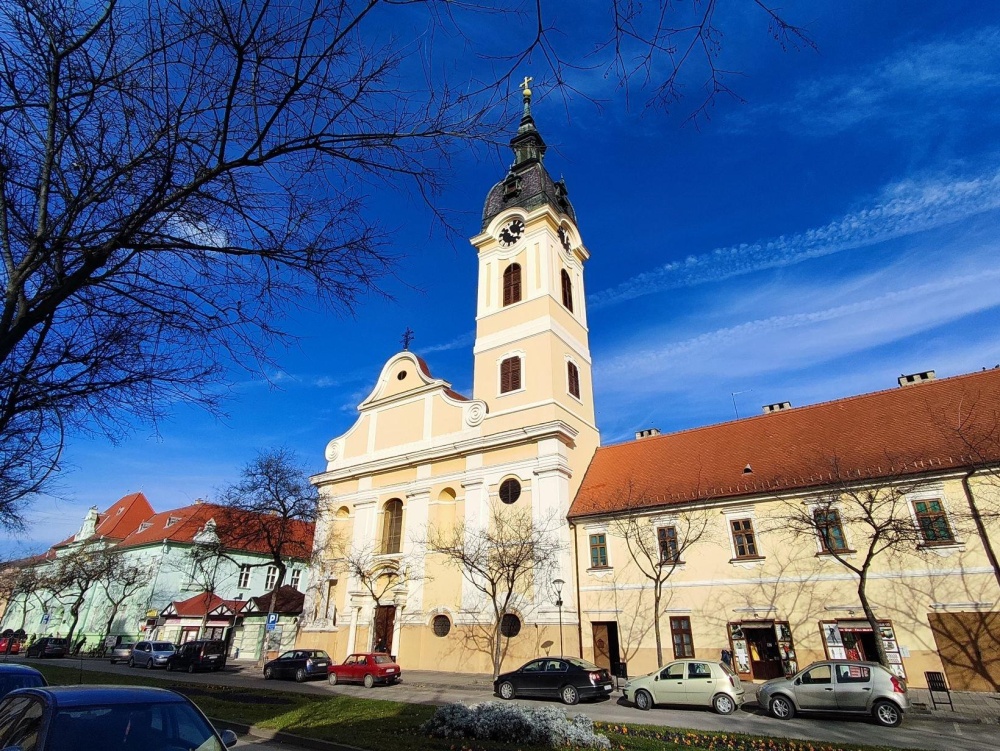
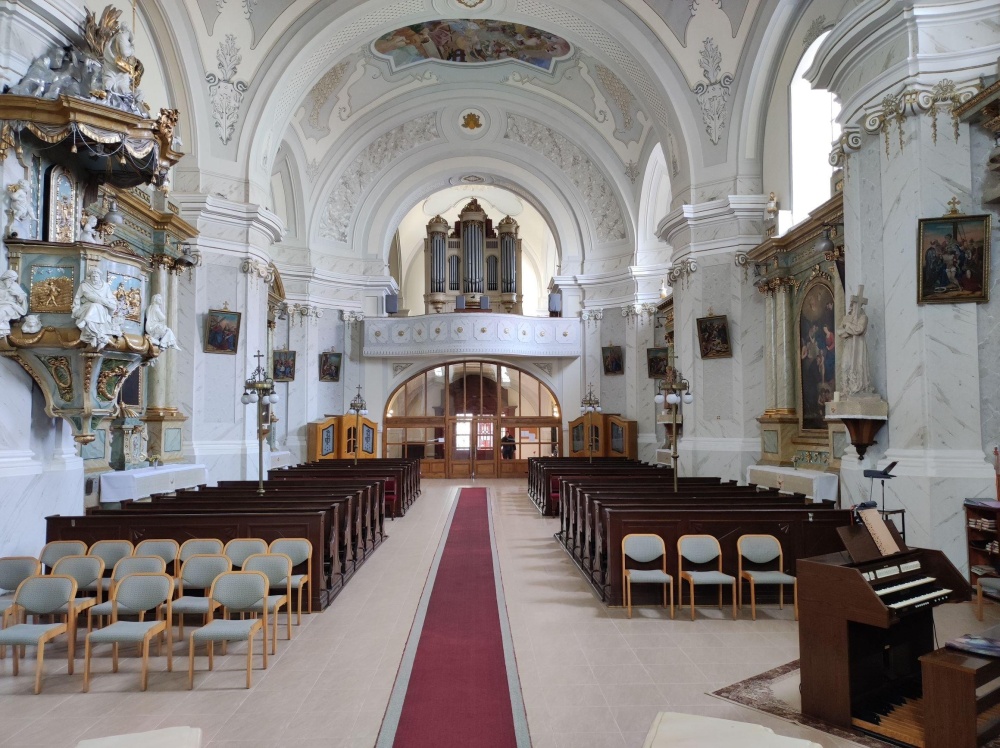
Sombor, Holy Trinity Catholic Church
Trg Cara Lazara 2
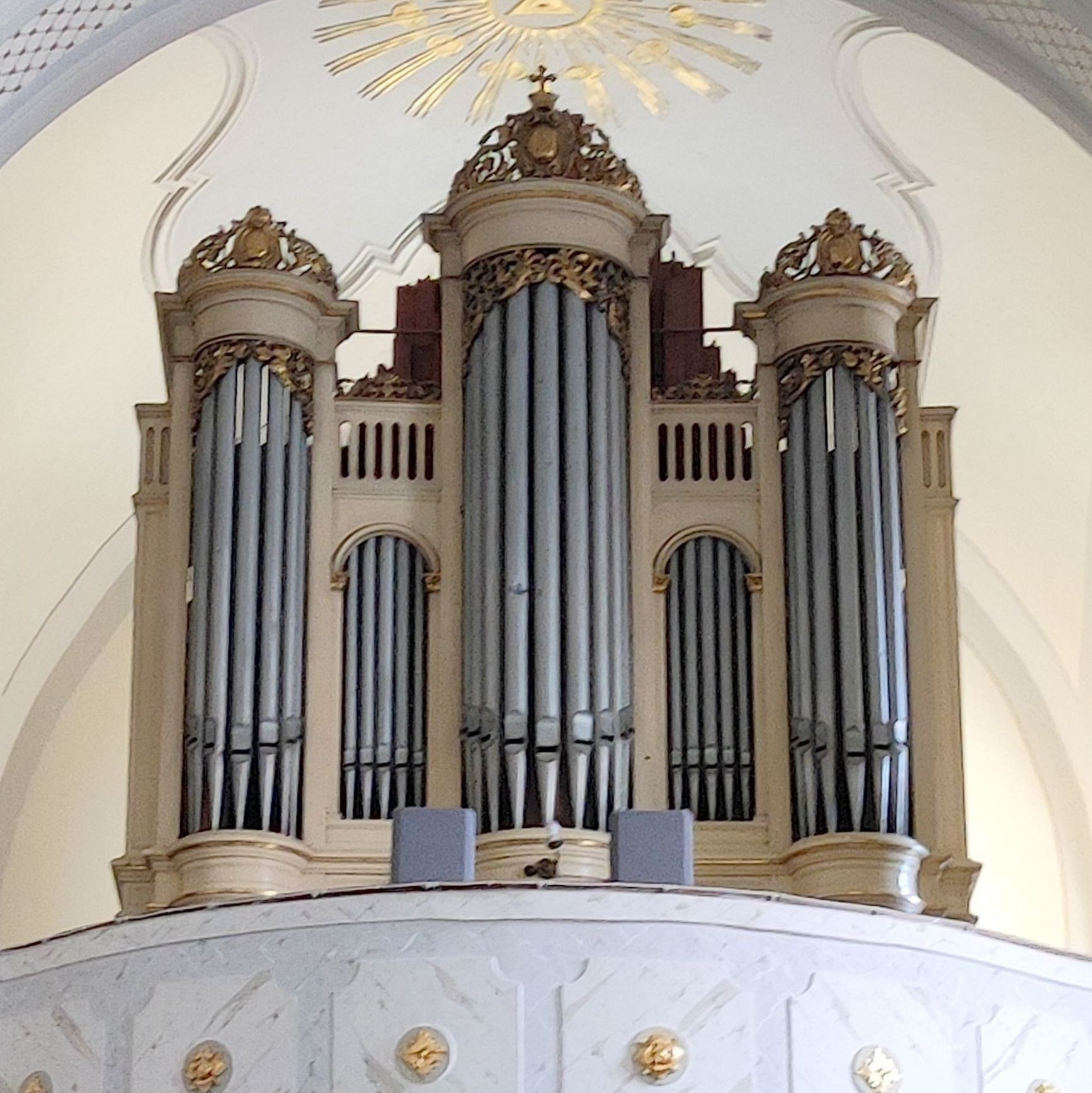
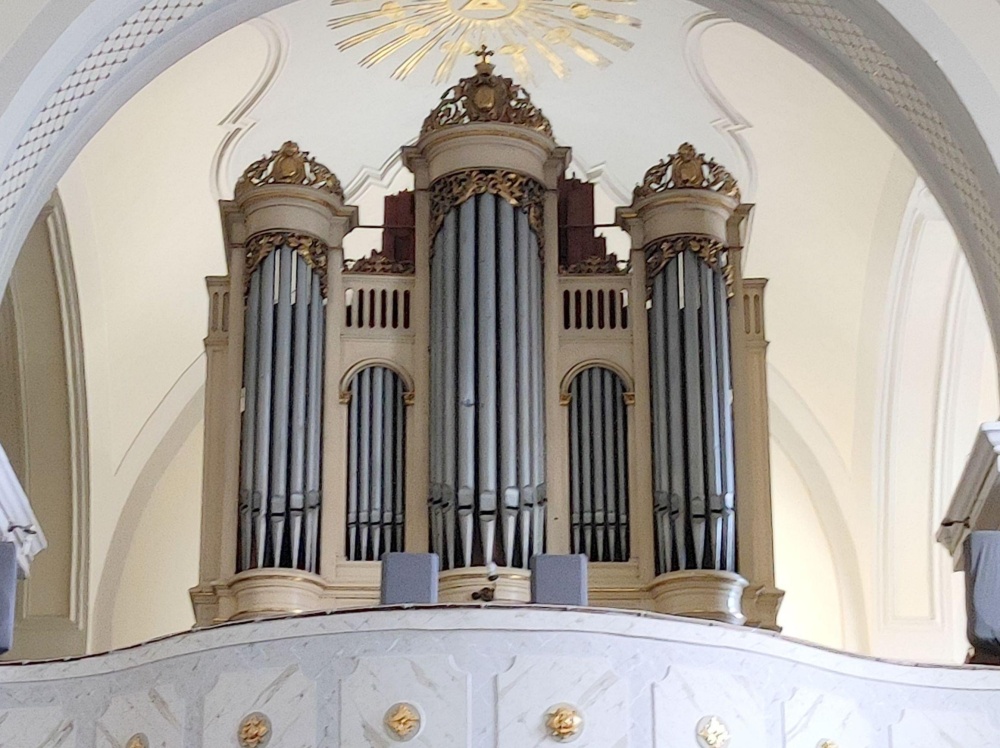
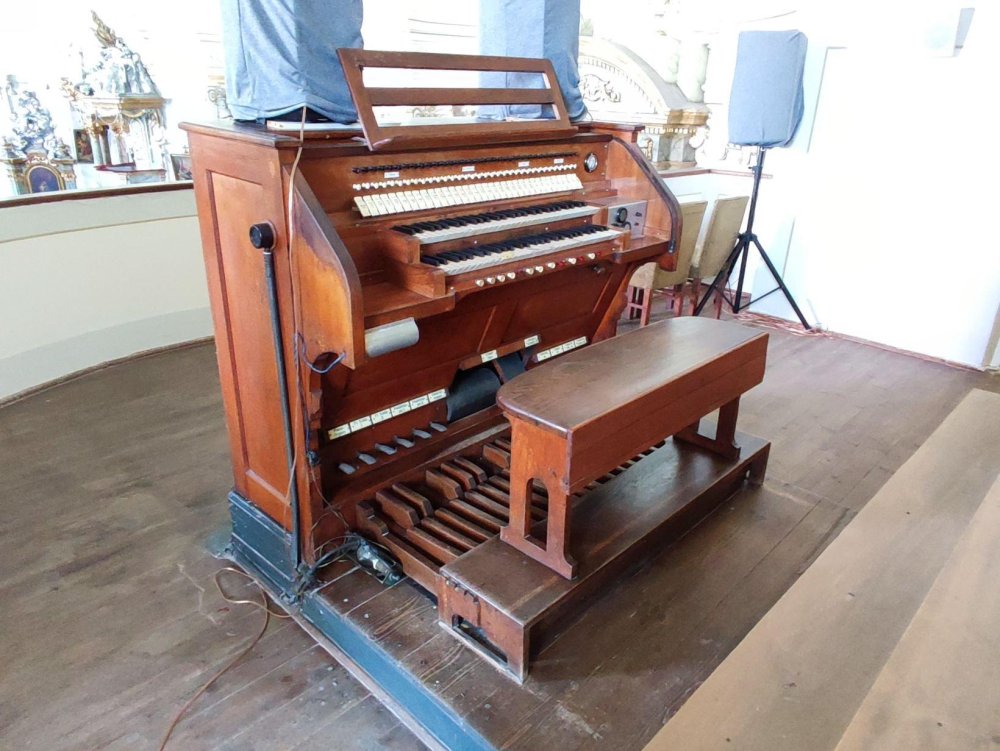
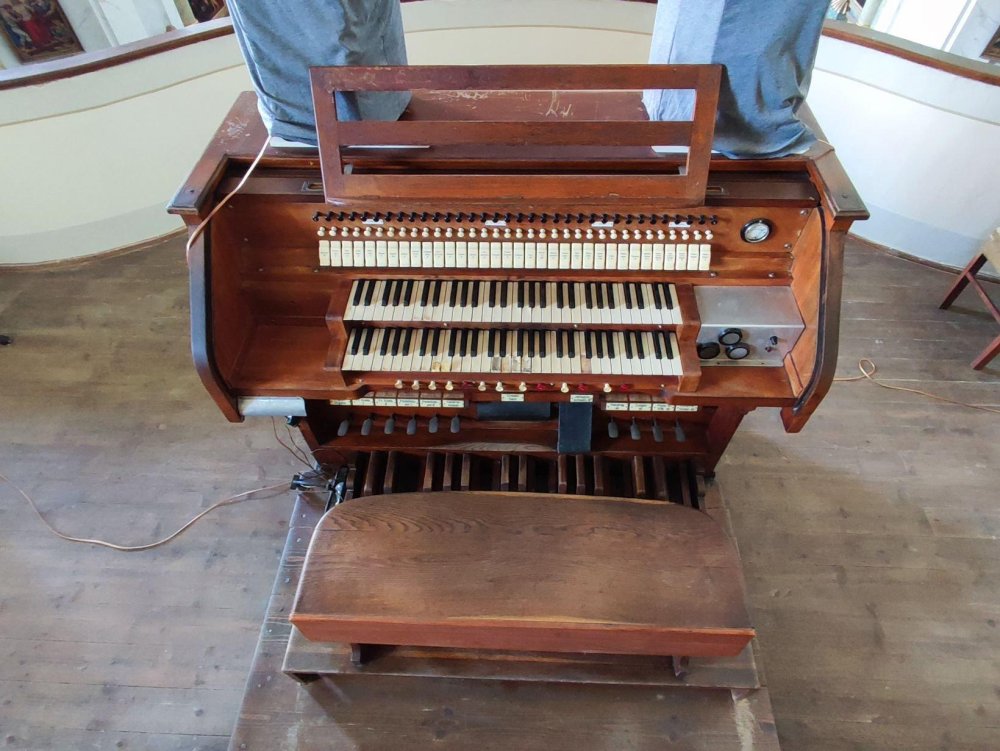
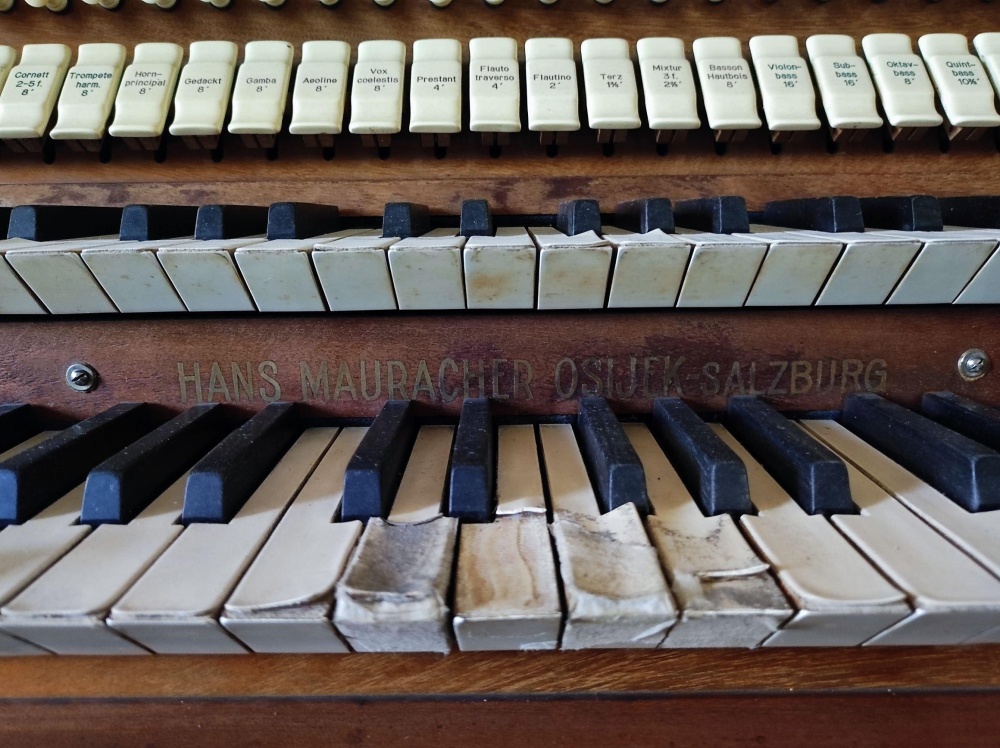
József Angster, Österreichische Orgelbau AG "Cäcilia", op. 21, 1927, II/28, pneumatic tracker action, doesn't work
← →
| Stop List | ||
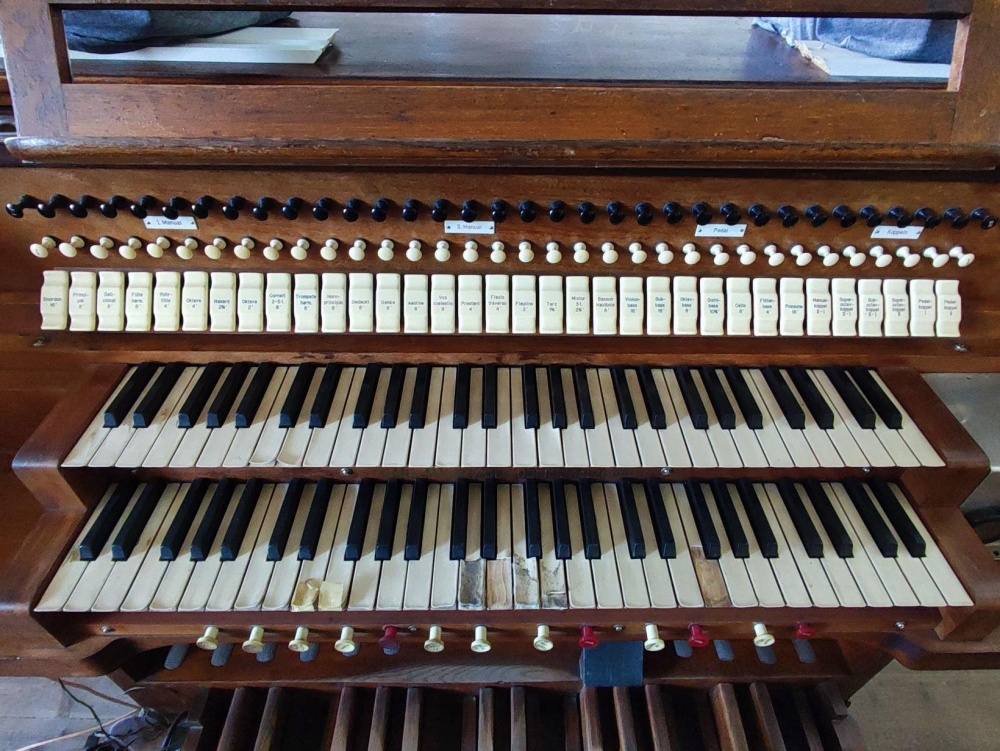
| I. Great | II. Swell | Pedal |
| Bourdon 16´ | Hornprincipal 8´ | Subbass 16´ |
| Principal 8´ | Gedackt 8´ | Violonbass 16´ |
| Flûte harm. 8´ | Gamba 8´ | Quintbass 10 2/3´ |
| Salicional 8´ | Aeoline 8´ | Oktavbass 8´ |
| Octave 4´ | Vox coelestis 8´ | Cello 8´ |
| Rohrflöte 4´ | Prestant 4´ | Flötenbass 4´ |
| Nasard 2 2/3´ | Flauto traverso 4´ | Posaune 16´ |
| Octave 2´ | Flautino 2´ | |
| Cornett 2-5 fach 8´ | Terz 1 1/3´ | |
| Trompete harm. 8´ | Mixtur 3 fach 2 2/3´ | |
| Basson Hautbois 8´ | ||
| (rocking tablets) | ||
| Compass: manual range C-a´´´, pedal range C-f´ | ||
| Couplers: II/I, Sup. II/I, Sub II/I, Sup. II, I/P, II/P (rocking tablets) | ||
| Other playing aids: | ||
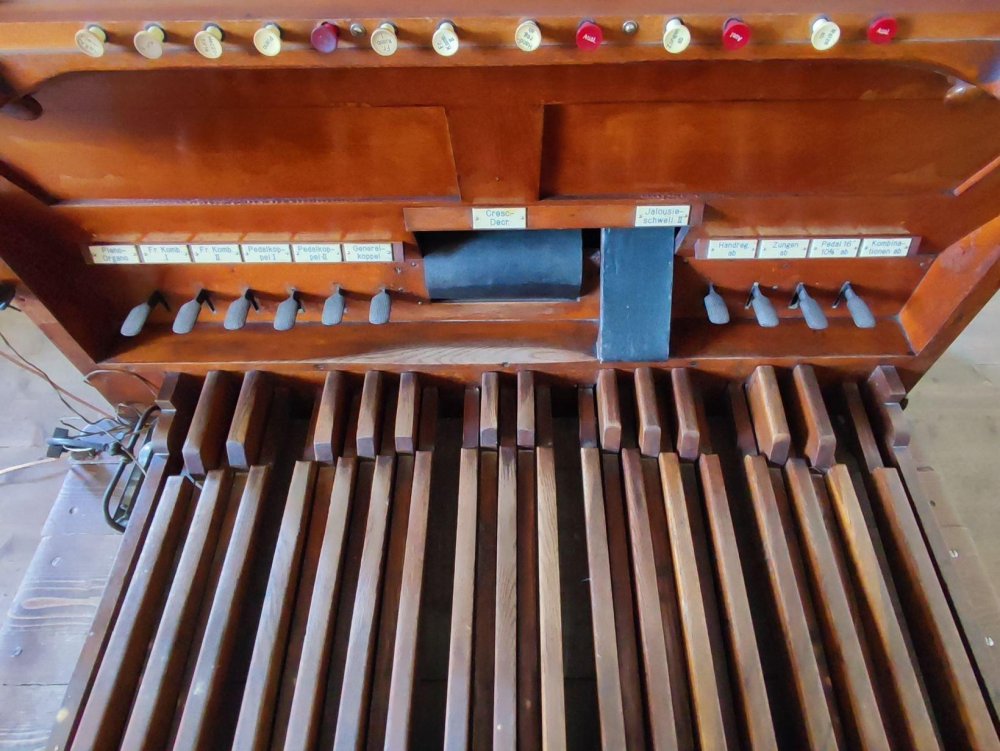
| Pleno Organo, Forte, Mezzoforte, Piano, Ausl., Fr. Komb. I, Fr. Komb. II (thumb pistons) | ||
| Handreg ab, Ausl., Zungen ab, Ausl., Walze ab, Ausl. (thumb pistons) | ||
| Organo Pleno, Fr. Komb I, Fr. Komb II, Handreg. ab, Zungen ab, Kombinationen ab (pedals) | ||
| I/P, II/P, Generalkoppel, Pedal 16´ + 10 2/3´ ab (hook-down pedals) | ||
| rollschweller, expression pedal | ||
| Windchest type: pneumatic cone-valve chest | ||
| Remarks: | ||
| The former organ (Angster, op. 21, 1877) was extended and rebuilt by the organ building | ||
| company Österreichische Orgelbau AG "Cäcilia". | ||
| 1999, during the tunig of the organ, Mario Bjelanović, organ builder from Belgrade noticed | ||
| intensive woodworm damage on the wood elements. Because of the lack of intervention, | ||
| the state of the organ got worse and worse. For years, the organ has not worked. | ||
| Sources: | ||
| Online consultation with the expert for organ, Judit Hajdók (2025) | ||
| Fieldwork of Zoltán Borbély (2022) | ||
| Photos: Zoltán Borbély | ||
← →